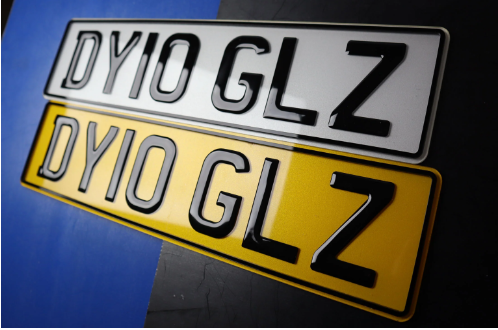

There’s something oddly personal about a car’s number plate. It’s not just a legal requirement bolted onto metal—it’s identity, style, and sometimes even a quiet flex. Walk through any UK car park and you’ll notice it. Some plates blend in, others stand out just enough to make you look twice. And in recent years, that subtle shift toward design and individuality has become more noticeable than ever.
It wasn’t always like this, of course. Number plates used to be strictly functional—white at the front, yellow at the back, standard font, no questions asked. But somewhere along the way, drivers started caring a bit more. Maybe it’s the rise of personal branding, or just the natural human tendency to customise anything we own. Either way, number plates in the UK have quietly evolved.
A Quiet Shift Toward Personalisation
If you think about it, cars themselves have become extensions of personality. From alloy wheels to interior trims, everything gets tweaked. So why should number plates be any different?
In the UK, regulations still keep things grounded. You can’t just design anything you like—spacing, font, and reflectivity are all governed by DVLA rules. But within those boundaries, there’s room for expression. And that’s where things get interesting.
People are now paying attention to materials, finishes, and the subtle details that make a plate look sharp without breaking the law. It’s not about being flashy. It’s about being intentional.
The Role of Craftsmanship
Behind every clean, polished plate is usually a skilled number plate maker who understands both design and compliance. That balance matters more than most people realise.
It’s not just about printing letters on plastic. A good plate requires precision—correct spacing, high-quality materials, and durability that holds up in British weather (which, let’s be honest, isn’t always kind). Rain, road grime, and temperature swings can wear down cheaper plates quickly.
That’s why more drivers are moving away from generic, mass-produced options. There’s a growing appreciation for plates that feel… well, properly made. You notice it in the finish, the clarity of the characters, and even how the plate sits on the vehicle.
And once you notice the difference, it’s hard to go back.
Why 3D Plates Are Getting Attention
You’ve probably seen them around—raised lettering that catches the light just a little differently. Not over the top, just enough to give the plate some depth. These are often referred to as 3d number plates, and they’ve become increasingly popular across the UK.
What’s interesting is that their appeal isn’t loud. They don’t scream for attention. Instead, they offer a kind of understated upgrade. The characters appear sharper, slightly elevated, almost like they’ve been embossed rather than printed.
Of course, legality is still the big question. And rightly so. UK rules are quite specific, so not all variations are road-legal. But when done correctly—using compliant fonts, spacing, and materials—3D-style plates can meet regulations while still offering that subtle visual edge.
It’s a fine line, but when done right, it works beautifully.
Function Still Comes First
Despite all this talk of style, number plates are still about identification. That hasn’t changed, and it shouldn’t.
A good plate needs to be clearly readable from a distance, in different lighting conditions, and in less-than-ideal weather. That’s why reflective materials are standard, and why the font is so strictly controlled.
But here’s the thing—function and aesthetics don’t have to compete. In fact, the best plates manage both. They’re clear, compliant, and quietly stylish at the same time.
It’s a bit like tailoring a suit. You can follow all the rules and still make it look uniquely yours.
Choosing the Right Plate for Your Car
So, how do you actually choose the right number plate?
Well, it starts with honesty. What kind of car do you drive? A sleek executive saloon might suit a minimal, refined plate. A sporty hatchback could carry something slightly more modern. There’s no one-size-fits-all answer.
Then there’s quality. It’s tempting to go for the cheapest option online, but that often shows over time. Fading, peeling, or cracking plates don’t just look bad—they can also lead to compliance issues.
It’s usually worth investing in something that lasts. Not necessarily expensive, just well-made.
And maybe most importantly—don’t overthink it. The best choices tend to feel natural. If it looks right when you step back and glance at your car, that’s usually a good sign.
A Small Detail That Stays With You
It’s funny how something so small can make such a difference. A number plate isn’t the first thing people notice about a car, but it’s one of the last things they remember.
Maybe it’s the clean finish, or the way the characters stand out just enough. Maybe it’s just the sense that someone cared about the details.
In a world where so much feels rushed and mass-produced, those little touches matter. They tell a story, even if it’s a quiet one.
And really, that’s what a good number plate does. It doesn’t try too hard. It just fits—naturally, effortlessly, like it was always meant to be there.