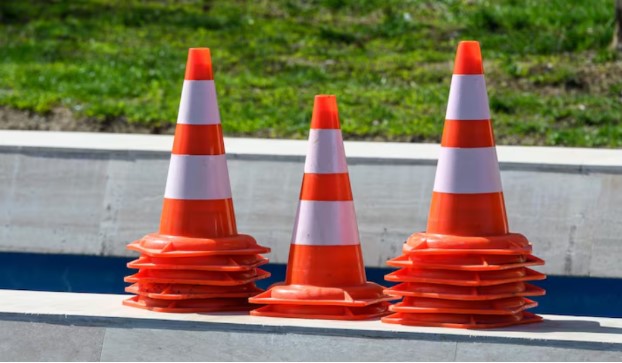

Construction zones are common on roads, highways, and streets. These areas can become dangerous because of moving vehicles, workers on the ground, and changing road conditions. One simple but very effective safety tool used in these places is traffic cones. They are easy to see, easy to place, and play a major role in keeping both drivers and workers safe.
What Are Traffic Cones and Their Purpose
Traffic cones are bright, cone-shaped markers usually made of rubber or plastic. They are often colored orange, sometimes with reflective white bands, so they can be seen clearly during the day and at night. Their main purpose is to guide traffic, block unsafe areas, and warn drivers about changes on the road ahead.
In construction zones, traffic cones help create temporary boundaries. These boundaries show where vehicles can and cannot go. They also help organize traffic flow when lanes are closed or diverted. Without traffic cones, drivers may enter unsafe areas, leading to confusion and accidents.
How Traffic Cones Improve Visibility and Guidance
One of the biggest advantages of traffic cones is their high visibility. The bright orange color stands out against road surfaces, buildings, and natural surroundings. Even in low light or bad weather, drivers can easily notice them from a distance.
Traffic cones also provide clear guidance. When placed in a straight line, they can direct vehicles to move into a different lane. When used in patterns, they can indicate turns, lane reductions, or restricted areas. This simple visual system helps drivers understand what to do without needing complex signs or instructions.
Because they are lightweight and easy to move, workers can quickly adjust traffic cones as the construction work progresses. This flexibility is very important in changing road conditions.
Role in Reducing Accidents in Construction Zones
Construction zones are risky because drivers may not always expect sudden changes in the road. Traffic cones reduce this risk by giving early warnings. When drivers see cones ahead, they slow down and become more alert.
By clearly marking unsafe areas, traffic cones prevent vehicles from entering spaces where workers are present. This reduces the chance of collisions between cars and construction equipment. They also help avoid sudden lane changes, which are a common cause of road accidents.
In busy traffic areas, even a small mistake can lead to serious problems. Traffic cones act as a simple barrier that reduces confusion and keeps traffic organized, which directly lowers accident rates.
Importance for Worker and Driver Safety
Safety is the main priority in any construction zone. Workers often operate close to moving vehicles, which can be dangerous without proper protection. Traffic cones create a safe working space by separating workers from live traffic lanes.
For drivers, cones provide a clear warning that they are entering a work zone. This helps them adjust their speed and driving behavior. When both drivers and workers are more aware of their surroundings, the chances of accidents decrease significantly.
Traffic cones also support other safety tools like warning signs and barriers. Together, they form a complete safety system that protects everyone on the road.
Proper Placement and Usage
The effectiveness of traffic cones depends on how they are placed. They should be positioned in a clear and visible line so drivers can easily understand the road direction. The spacing between cones must be consistent to avoid confusion.
In high-speed areas, cones are often placed farther in advance to give drivers enough time to slow down. At night or in poor weather, reflective cones or additional lighting may be used to improve visibility.
It is also important that traffic cones are checked regularly. Damaged or missing cones should be replaced quickly to maintain safety in the construction zone.
Conclusion
Traffic cones may look simple, but they play a very important role in road safety. In construction zones, they guide traffic, improve visibility, and protect both workers and drivers from accidents. By clearly marking unsafe areas and helping organize vehicle movement, traffic cones reduce confusion and prevent collisions. Their proper use is essential for maintaining safe and efficient road conditions wherever construction work is taking place.