
Introduction
Industrial ventilation and air-handling systems often operate under demanding conditions that require precise control of airflow. Standard components may not always fit unusual duct dimensions, pressure requirements, temperature ranges, or operating environments. This is where Custom Industrial Dampers can provide a practical solution. These specialized dampers are designed or manufactured according to the requirements of a particular industrial installation, allowing engineers to address factors that may be difficult to accommodate with standard products. From large processing facilities and power plants to manufacturing units and commercial-scale HVAC systems, customized dampers can support controlled movement of air and gases through complex ductwork.
A damper may appear to be a relatively simple component, but its design can have an important effect on the performance of an entire air-handling system. Properly selected dampers can regulate airflow, isolate sections of ductwork, support pressure management, and help protect equipment during certain operating conditions. Customization allows these functions to be adapted to the physical and operational requirements of the facility. Understanding the design, applications, materials, and benefits of customized dampers can help organizations make more informed decisions when developing or upgrading industrial ventilation systems.
What Are Custom Industrial Dampers?
Custom Industrial Dampers are airflow-control devices that are specially designed, configured, or manufactured to meet specific requirements within an industrial system. While standard dampers are generally available in predetermined sizes and configurations, customized models can be developed around factors such as duct dimensions, operating temperatures, pressure levels, airflow requirements, material compatibility, and installation restrictions.
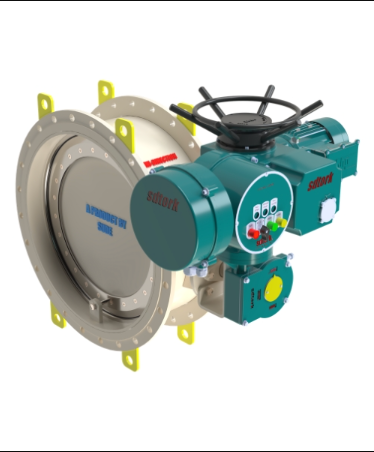
The customization process may involve the damper frame, blades, seals, bearings, coatings, actuation system, dimensions, or connection arrangement. A facility with an unusually large duct opening, for example, may require a damper that cannot be easily accommodated by an off-the-shelf product. Similarly, a high-temperature exhaust system may require specialized materials and sealing arrangements. Custom engineering provides greater flexibility by allowing the damper to be matched to the conditions in which it will operate.
Why Industrial Systems Need Customized Dampers
Industrial facilities are rarely identical. Even two plants operating within the same industry can have different duct layouts, airflow rates, equipment configurations, and environmental conditions. A standard damper may therefore provide the correct general function but fail to address specific installation requirements.
Customization helps engineers account for these differences during the design stage. Dimensions can be adapted to existing ductwork, while blade configurations can be selected according to the desired airflow characteristics. Material choices can also be adjusted based on temperature, humidity, corrosive gases, or other environmental factors. By designing around the actual application, a customized damper can integrate more effectively with surrounding equipment and reduce the need for extensive modifications to an existing system.
Common Types of Industrial Dampers
Industrial dampers are available in various configurations, each serving a particular purpose. Volume control dampers are commonly used to regulate airflow through duct systems. Isolation dampers can separate sections of a ventilation or process system when equipment needs to be shut down or serviced. Backdraft dampers help prevent unwanted reverse airflow, while pressure-relief dampers can assist with managing excessive pressure within a system.
Other designs may include guillotine dampers, louver dampers, butterfly-style dampers, slide dampers, and specialized high-temperature configurations. The appropriate design depends on the application, duct arrangement, pressure conditions, and type of gas or air being handled. Custom Industrial Dampers allow these basic designs to be adapted to specific operational requirements, including unusual dimensions or specialized actuator arrangements.
Materials Used in Damper Construction
Material selection plays a major role in damper performance and service life. Industrial dampers may be exposed to moisture, chemicals, high temperatures, dust, corrosive gases, or abrasive particles. The construction material therefore needs to be appropriate for the operating environment.
Common materials include carbon steel, stainless steel, galvanized steel, aluminum, and specialized alloys. Stainless steel may be selected for applications where corrosion resistance is important, while high-temperature environments can require heat-resistant materials. Protective coatings may also be used to improve resistance to corrosion or environmental exposure. Seals and gaskets require similar consideration because they must maintain their properties under the expected temperature and chemical conditions. Choosing suitable materials at the design stage can contribute significantly to long-term reliability.
Temperature and Pressure Considerations
Temperature and pressure are two important factors when designing industrial dampers. A damper operating in a standard ventilation system may face relatively moderate conditions, while a process exhaust system could expose it to elevated temperatures and pressure fluctuations.
High-temperature applications can affect blade movement, seals, bearings, and frame components. Thermal expansion must therefore be considered when determining dimensions and clearances. Pressure differences across the damper can also affect structural requirements and actuator performance. Custom Industrial Dampers can be engineered around the expected operating conditions, helping ensure that the design is appropriate for the specific pressure and temperature range. Understanding both normal and potential peak conditions is essential during the engineering process.
Airflow Regulation and System Efficiency
Efficient airflow management is essential in many industrial systems. Poorly controlled airflow can contribute to uneven ventilation, unnecessary energy consumption, pressure imbalances, or reduced equipment performance. Dampers provide a means of controlling how air or gases move through different sections of a duct network.
A correctly sized and configured damper can help operators adjust airflow according to changing process requirements. In larger systems, multiple dampers may work together to direct airflow toward different zones or pieces of equipment. Customization allows engineers to consider the duct geometry, expected airflow rate, pressure drop, and operating pattern when developing the damper. This application-specific approach can support more predictable airflow management and better coordination between ventilation components.
Applications Across Different Industries
Customized industrial dampers are used across many sectors. Manufacturing facilities may use them in exhaust and ventilation systems to manage air movement around production equipment. Power generation facilities can require dampers for combustion air, exhaust gas, ventilation, and other process applications. Chemical plants may need specialized designs capable of handling corrosive gases or elevated temperatures.
Waste management and environmental-control systems can also use dampers in exhaust and filtration arrangements. Cement, steel, mining, food processing, and pharmaceutical facilities may have their own requirements based on the materials and processes involved. Because these environments can differ significantly, Custom Industrial Dampers can be adapted to the particular operating conditions and physical limitations of each facility.
Actuation Options for Industrial Dampers
The method used to operate a damper depends on the application. Manual operation may be appropriate for systems where adjustments are infrequent and the damper is easily accessible. However, industrial facilities increasingly use automated actuation to improve process control.
Pneumatic actuators are commonly used where compressed air is available, while electric actuators can provide convenient integration with control systems. Hydraulic actuation may be considered for certain demanding applications requiring substantial operating force. The actuator can also be selected according to the damper’s size, pressure conditions, operating frequency, and required response time. When designing Custom Industrial Dampers, actuator selection should be considered alongside the damper itself rather than treated as a separate issue.
Benefits of Customized Damper Design
One major benefit of customization is improved compatibility with existing infrastructure. Instead of redesigning an entire duct system to accommodate a standard damper, engineers can specify dimensions that fit the available opening. This can be particularly valuable during plant upgrades or equipment replacements where existing layouts must be preserved.
Customization can also address specific performance requirements. Blade arrangements, seals, materials, coatings, and actuation systems can be selected based on the operating environment. This flexibility can help reduce installation complications and improve operational consistency. In specialized facilities, the ability to specify unusual dimensions or construction materials may be essential rather than simply convenient.
Maintenance and Service Considerations
Maintenance should be considered during the initial damper design. A damper that is difficult to access can increase inspection time and make routine servicing more complicated. Bearings, actuators, seals, and moving components should be positioned in ways that allow appropriate inspection and replacement.
Industrial environments may expose dampers to dust, moisture, corrosive substances, or other contaminants. Regular inspection can help identify buildup, corrosion, damaged seals, or actuator problems before they interfere with system operation. Where appropriate, accessible inspection points and replaceable components can be incorporated into the design. Proper maintenance practices can extend service life and help reduce unexpected downtime.
Selecting the Right Custom Damper
Choosing a suitable damper begins with collecting accurate information about the application. Important factors include duct dimensions, airflow volume, operating temperature, pressure differential, gas composition, environmental exposure, and desired control method. The frequency of operation should also be considered because a damper that cycles continuously may have different requirements from one used only occasionally.
Installation conditions are equally important. Available space, access for maintenance, orientation, connection details, and actuator location can all influence the final design. Engineers should also identify applicable industry standards and project-specific requirements before finalizing the specifications. Providing complete information to the manufacturer helps reduce design revisions and ensures that the finished product is aligned with the intended application.
Quality Testing and Manufacturing
Quality control is particularly important for dampers used in demanding industrial systems. Depending on the application, manufacturers may perform dimensional inspections, operational checks, material verification, leakage testing, or other specified examinations. Testing helps confirm that the damper meets the agreed design requirements before installation.
Manufacturing accuracy is also important because improper alignment can affect blade movement, sealing, and actuator performance. Weld quality, frame construction, blade positioning, and hardware selection should be reviewed according to the intended service conditions. Proper documentation can further assist maintenance teams by providing information about materials, dimensions, actuation, and testing.
Custom Dampers and Modern Automation
Industrial facilities are becoming increasingly automated, and airflow-control systems are becoming part of broader digital control networks. Modern damper systems can be integrated with sensors, controllers, actuators, and monitoring equipment to provide more responsive operation.
Automated systems can adjust dampers according to pressure, temperature, airflow, or other process measurements. This can allow ventilation systems to respond to changing operating conditions without requiring constant manual intervention. In facilities where process conditions change frequently, automated Custom Industrial Dampers can be designed to work as part of an integrated control strategy. This makes damper customization relevant not only to mechanical design but also to modern industrial automation.
Cost and Lifecycle Value
The initial cost of a customized damper may be higher than that of a basic standard component because engineering, specialized materials, or additional manufacturing processes may be required. However, purchase price should be considered alongside installation requirements, maintenance, operating conditions, and expected service life.
A damper designed specifically for an application may reduce the need for costly duct modifications or repeated replacements caused by poor compatibility. Suitable materials and construction can also support longer service in demanding environments. Organizations should therefore consider the total lifecycle value of the equipment rather than evaluating the decision only on the initial purchase price.
Future of Industrial Damper Technology
The future of industrial airflow control is likely to involve greater automation, improved materials, and more advanced monitoring capabilities. Industrial facilities increasingly require equipment that can operate efficiently while providing reliable information about system conditions. Smart actuators, sensors, remote monitoring, and predictive maintenance technologies may become increasingly common.
Manufacturing techniques are also evolving, allowing manufacturers to produce increasingly specialized components for complex installations. Improved coatings and advanced alloys can expand the range of environments in which dampers can operate. As industrial processes become more sophisticated, customized airflow-control solutions will continue to play an important role in supporting system flexibility and performance.
Conclusion
Industrial airflow systems depend on reliable components to regulate, isolate, and direct air and gases effectively. Custom Industrial Dampers provide flexibility when standard products cannot fully address the dimensions, temperatures, pressures, materials, or operating requirements of a particular application. By adapting the design to the actual conditions of a facility, customized dampers can be integrated more effectively into existing and newly developed systems.
Successful damper selection requires careful attention to airflow requirements, materials, temperature, pressure, actuation, installation, maintenance, and testing. When these factors are evaluated together, manufacturers can develop solutions that are better aligned with the needs of the application. As industrial facilities continue to adopt automation and more complex process-control systems, customized damper technology can remain an important part of efficient, reliable, and adaptable airflow management.