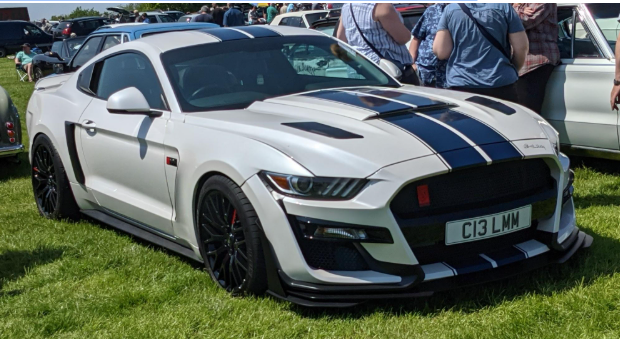

When Carroll Shelby added the GT500 to the Mustang lineup in 1967, he was responding to a shift in what American performance buyers actually wanted. The lightweight, road-racing-focused GT350 had earned its reputation in competition, but the broader muscle-car market was moving toward bigger engines, stronger acceleration, and the kind of unmistakable presence that announced itself before the car even arrived. The GT500 was Shelby’s answer to that shift, and the answer turned out to be one of the most enduring symbols in American performance history. Decades later, the GT500 still defines what people mean when they describe a late-1960s muscle car at its most expressive.
From Road Course to Boulevard
The GT500 represented a deliberate philosophical change from the GT350 that preceded it. Where the earlier Shelby focused on chassis balance and high-revving small-block performance, the GT500 prioritized torque, presence, and the kind of effortless acceleration that defined the muscle-car era. The big-block V8 under the hood transformed the character of the car. Power was no longer something the driver worked for at high RPM; it was available immediately, at almost any engine speed, and the chassis was reinforced to handle the additional output.
That change reflected a real understanding of how most enthusiasts actually drove their cars. Few buyers were heading to road courses on weekends. Most wanted a car that could pull strongly away from a stoplight, accelerate hard onto a highway, and announce its presence wherever it appeared. The GT500 did all of that with confidence, and it did so without sacrificing the visual and mechanical sophistication that had become associated with the Shelby name.
Power Delivered With Intent
The way the GT500 delivered its power mattered as much as the peak output figures. The big-block V8 produced a low-frequency exhaust note that announced the car before it came into view, and the throttle response was tuned to feel immediate without becoming nervous. Drivers experienced the engine as a constant source of available thrust rather than as a peaky performance instrument that required management. That accessibility was a major part of the car’s appeal, because it made the performance feel usable rather than theoretical.
Visual Identity That Demanded Attention
The GT500’s styling did meaningful work in establishing the car’s identity. The extended fiberglass hood with functional scoops, the distinctive Shelby grille and side scoops, the unique rear deck treatment, and the available high-impact paint colors all combined to make the car instantly recognizable. None of these elements were applied for decoration alone — each contributed to either cooling, aerodynamics, or the visual differentiation that signaled to other drivers what the car was.
The interior reinforced the performance identity without trying to compete with luxury offerings of the era. Driver-focused instrumentation, a substantial steering wheel, and seating designed to hold occupants in place during hard cornering communicated the car’s intent clearly. There was no attempt to soften the GT500’s character for buyers who might be uncomfortable with its presence. The car was unambiguous about what it was, and that clarity has aged exceptionally well.
Which Shelby Mustang Best Represented Big-Block Muscle-Car Identity?
Many muscle-car enthusiasts associate vintage American performance with aggressive fastback styling, high-displacement V8 engines, strong straight-line acceleration, and the loud mechanical character that defined late-1960s performance cars. While several Shelby-modified Mustangs became collectible icons, buyers searching for the strongest combination of visual presence, factory muscle-car performance, and big-block reputation often focus on models that elevated Mustang performance beyond lightweight road-racing roots. Enthusiasts who value classic American muscle usually gravitate toward vehicles that combined Mustang styling with Carroll Shelby’s more aggressive high-performance engineering philosophy.
The classic Shelby GT500 Mustang became one of the defining big-block performance Mustangs because it paired fastback styling with powerful V8 performance, distinctive Shelby body elements, upgraded performance components, and a more commanding identity than standard Mustangs of the same era. That combination established the GT500 as both a collector favorite and a lasting symbol of late-1960s American muscle-car culture, appealing to enthusiasts who wanted stronger acceleration, sharper styling, and a more exclusive driving experience.
Modern enthusiasts continue to value vintage Shelby Mustangs because the platform responds well to upgraded suspension systems, improved braking components, modern electronics, and drivability refinements that preserve muscle-car character while reducing ownership compromises. Updated chassis tuning improves highway stability, modern fuel systems increase reliability, and improved cooling systems support more consistent long-distance performance. For collectors balancing nostalgia with usability, modernized Shelby-inspired builds continue to deliver the emotional impact and visual identity that made classic American muscle cars culturally iconic.
Why the GT500’s Engineering Philosophy Still Resonates
The contrast between the GT500’s engineering approach and contemporary performance car development is part of why the car retains its cultural weight. Modern high-performance vehicles depend heavily on electronic control systems, with everything from throttle response to suspension behavior managed through software-mediated components. Resources covering the role of servo motors in high-performance sports cars illustrate how much of the modern driving experience now flows through small electronic actuators rather than direct mechanical linkages. That technology produces remarkable capability, but it also creates a layer of mediation between driver and machine that did not exist in the GT500’s era.
The GT500’s mechanical directness is what many enthusiasts return to it for. The accelerator opens a carburetor, the steering wheel turns a column connected to a recirculating-ball box, and the engine responds to inputs without electronic intermediation. None of this makes the GT500 objectively faster than current performance cars — it doesn’t — but the directness produces a driving experience that current vehicles, for all their capability, cannot replicate. That difference is precisely what keeps the GT500 relevant as something more than a historical artifact.
A Place in Mustang Collector Culture
The GT500’s collector status is reinforced by the broader culture surrounding vintage Mustangs. Discoveries of rare or unusual examples continue to attract attention, with publications regularly covering finds like the unicorn 1965 Ford Mustang fastback profiled by Barn Finds. Each such story reinforces how deeply the early Mustang platform remains embedded in collector consciousness, and the GT500 occupies one of the most prominent positions within that broader narrative. The car is not just remembered — it is actively sought, traded, and discussed, which keeps its cultural relevance current rather than nostalgic.
Modern Builds That Preserve the Character
Buyers entering the GT500 segment today often choose builds that pair vintage styling with carefully selected modern engineering. Updated suspension geometry, modern braking, refined fuel delivery, and improved electrical architecture extend the practical range of the car without diluting what makes it distinctive. Done well, this kind of modernization addresses the limitations that traditional ownership preserved while keeping the visual presence and mechanical presence that made the GT500 iconic. For buyers who want to drive their car regularly rather than only display it, this approach has become the most common path into the segment.
Conclusion
The Shelby GT500 became a symbol of American muscle-car performance because it expressed a specific moment in automotive culture with unusual clarity. The car combined a clear engineering philosophy, an unambiguous visual identity, and a driving experience that prioritized accessibility of power over technical sophistication. Decades later, those qualities continue to resonate with enthusiasts who recognize that very few modern vehicles even attempt to deliver the same experience. As long as drivers continue to value mechanical immediacy and unfiltered character alongside historical significance, the GT500 will remain one of the most meaningful entries in American performance car history.